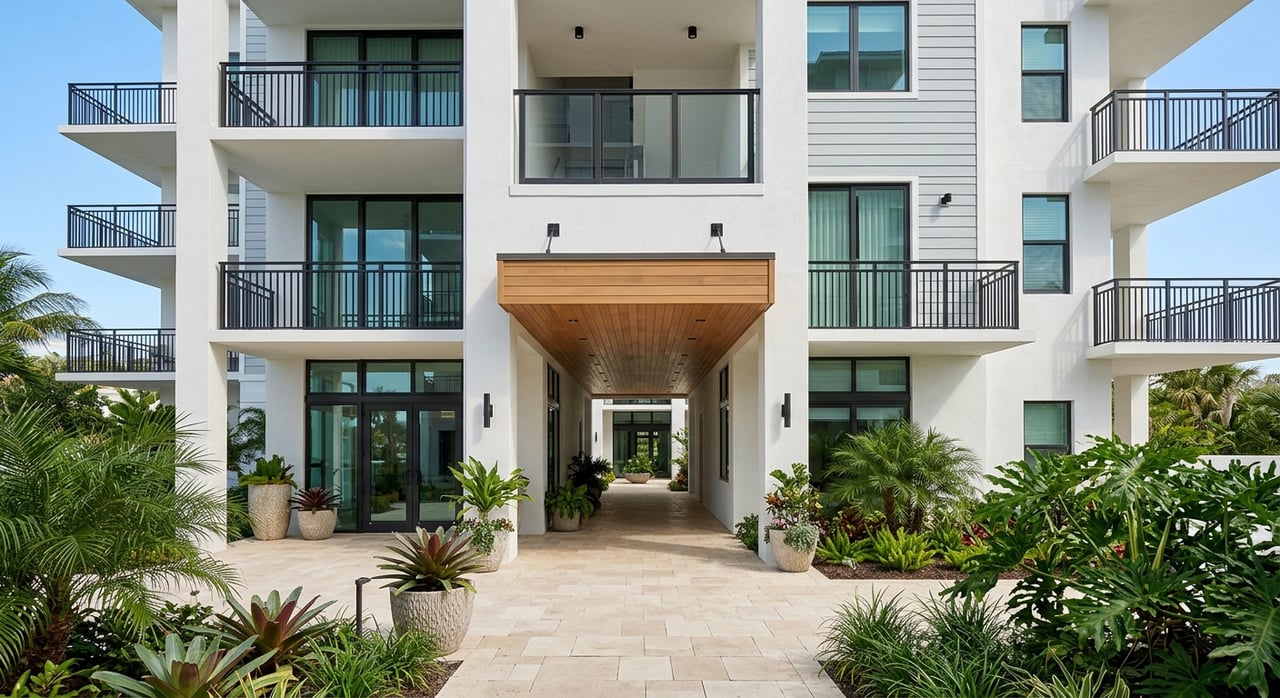
Jacksonville Beach Condo vs Home: What to Consider
April 16, 2026
April 16, 2026
If you are torn between a beach condo and a home near Jacksonville, you are not alone. Both options can deliver a coastal lifestyle, but they come with very different costs, rules, and day-to-day responsibilities. The right fit depends on how you want to live, how hands-on you want to be, and whether rental flexibility matters to you. Let’s break it down.
When people talk about "the beaches" near Jacksonville, it is easy to lump everything together. In reality, Jacksonville Beach, Neptune Beach, Atlantic Beach, and Ponte Vedra Beach are distinct coastal markets with different pricing patterns, rules, and local oversight.
Ponte Vedra Beach should be viewed separately from the Duval County beach cities because it is in St. Johns County. That matters for shoreline management and property tax administration, including homestead-related processes handled through St. Johns County. You can review that through the St. Johns County Ponte Vedra Beach project page.
Recent market snapshots also show meaningful differences across these coastal areas. According to Redfin market data for Jacksonville Beach, recent median sale prices were about $640,000 in Jacksonville Beach, $789,000 in Neptune Beach, $465,000 in Atlantic Beach, and $895,000 in Ponte Vedra Beach ZIP code 32082. These figures are best used as directional snapshots, not perfect side-by-side comparisons.
At a high level, choosing a condo usually means trading some privacy and control for more convenience. Choosing a detached home usually means taking on more maintenance in exchange for more space, more autonomy, and more control over your property.
For many buyers, this decision comes down to what I call responsibility density. A condo concentrates maintenance and building oversight through the association, while a home places more of that responsibility directly on you. Neither is automatically better. It simply depends on your goals.
Condos often appeal to buyers who want a more lock-and-leave lifestyle. If you travel often, split time between homes, or want less hands-on exterior upkeep, a condo can feel simpler to manage.
Under Florida condominium law, the association is generally responsible for maintaining common elements and certain portions of the condominium property as defined in the declaration. After a property loss, insured reconstruction is generally handled by the association as a common expense, while owners are still responsible for personal property and many interior items within the unit boundary.
That structure can reduce the number of day-to-day maintenance decisions you personally handle. It can also make condo living attractive if you value amenities and shared upkeep over direct control of every exterior detail.
Detached homes often appeal to buyers who want more privacy, more room, and more freedom over the property. You may have more control over your yard, exterior improvements, contractor choices, and timing of repairs.
That added control comes with more responsibility. Roof issues, exterior maintenance, landscaping, and many other costs are more likely to fall directly on you rather than being pooled through a condo association.
For buyers who want direct decision-making power, that trade can be worth it. For others, the convenience of condo ownership may feel more valuable.
The monthly cost comparison between a condo and a house is not always straightforward. A condo may have less visible maintenance on your to-do list, but more of those costs are bundled into dues, reserve funding, and possible special assessments.
Florida has also tightened reserve rules for many condo associations. Under Florida Statute 718.112, residential condos that are three habitable stories or higher must complete a structural integrity reserve study at least every 10 years, covering items like the roof, structure, fire protection, plumbing, electrical systems, waterproofing, exterior painting, windows, and exterior doors. For budgets adopted on or after December 31, 2024, associations generally may not underfund those required reserve items.
That is an important point if you are comparing a condo to a detached home. Condo ownership may reduce your direct maintenance workload, but it can also mean less flexibility when reserve requirements or building repairs push dues higher.
If you are looking at a detached home in a homeowners association, the fee structure is often different from a condo association. Under Florida HOA law in Chapter 720, reserve accounts can be adopted by majority vote, and owners can vote to fund no reserves or less than planned in some cases.
That does not mean HOA homes are always cheaper. It does mean the reserve framework is not the same as it is for many condos. In practical terms, you may have lighter dues with a house, but more direct responsibility for major repairs and maintenance decisions.
If you may rent the property, even occasionally, city rules deserve close attention. This is one of the biggest differences among the Jacksonville-area beach communities.
Among the three Duval beach cities, Jacksonville Beach is the most workable option if short-term rental use matters to you. The city requires a short-term vacation rental certificate for each property, annual renewal, and compliance with inspection, tax, licensing, and registration requirements. The city also notes that an owner-occupied dwelling unit renting 50% or less of the unit is not subject to the short-term vacation rental regulations. You can review those rules on the Jacksonville Beach short-term vacation rental page.
On top of city requirements, Duval County imposes a 6% Convention and Tourist Development Tax on short-term rentals. According to the Duval County tax collector, the combined transient rental tax rate is 13.5% when the 7.5% state sales tax is included, and monthly filing is required even if no tax was collected.
If rental income is part of your strategy, Jacksonville Beach deserves a closer look. Still, condo documents or HOA rules may be stricter than city code, so property-specific review is essential.
Neptune Beach takes a stricter approach. The city states that short-term rentals and commercial activities are prohibited in residential zoning districts, and it defines a short-term rental as one rented, leased, or advertised for less than 28 days. You can verify that through the Neptune Beach planning FAQ.
If you are hoping to offset ownership costs with short rental stays, Neptune Beach is generally not the best match based on current city rules.
Atlantic Beach is even more restrictive for residential zones, prohibiting rentals of less than 90 consecutive days. For buyers who want flexibility for vacation-rental use, that makes Atlantic Beach a poor fit.
If your focus is personal use, privacy, and a long-term hold, Atlantic Beach may still be worth considering. But if short-term rental potential is a key factor, this rule can quickly narrow your options.
Lifestyle is important, but resale should still be part of your decision. Even if you plan to stay for years, it helps to understand how different property types may perform when it is time to sell.
According to Florida Realtors' January 2026 market update, statewide single-family homes had 5.2 months of supply and a 96-day median time to sale, compared with 9.7 months of supply and a 105-day median time to sale for condo-townhouse units. That suggests condo and townhouse inventory was higher and the path to sale was somewhat slower than for single-family homes.
This does not mean a condo is a bad purchase. It does mean resale liquidity may look different, especially in a premium coastal market where buyers tend to compare association costs, reserves, and building conditions carefully.
If you are weighing a condo against a home near Jacksonville, start with your real priorities instead of the property type alone. The best choice usually becomes clearer when you focus on how you will actually use the home.
A condo may be the better fit if you want:
A detached home may be the better fit if you want:
Jacksonville Beach may be the strongest fit if you also want:
Ponte Vedra Beach may deserve separate consideration if you want:
On paper, a condo and a detached home can both check the box for coastal living. In practice, the better choice depends on ownership costs, rental rules, privacy needs, and your long-term plans.
When you are comparing Jacksonville Beach, Neptune Beach, Atlantic Beach, and Ponte Vedra Beach, the details matter. If you want a clear, tailored strategy for your goals along the Jacksonville coastal corridor, connect with Julie Little Brewer for experienced, relationship-driven guidance.
October 15, 2026
October 8, 2026
October 1, 2026
September 24, 2026
September 17, 2026
September 10, 2026
September 3, 2026
August 27, 2026
August 20, 2026
A seasoned full-time real estate professional, Julie has developed her expertise over decades of experience living and working in the area she calls home. She encourages you to contact her to become your trusted real estate partner. Together, let's achieve real estate success!
JULIE LITTLE BREWER
RE/MAX SPECIALISTS PV
250 A1A N STE 500
Ponte Vedra Beach FL 32082