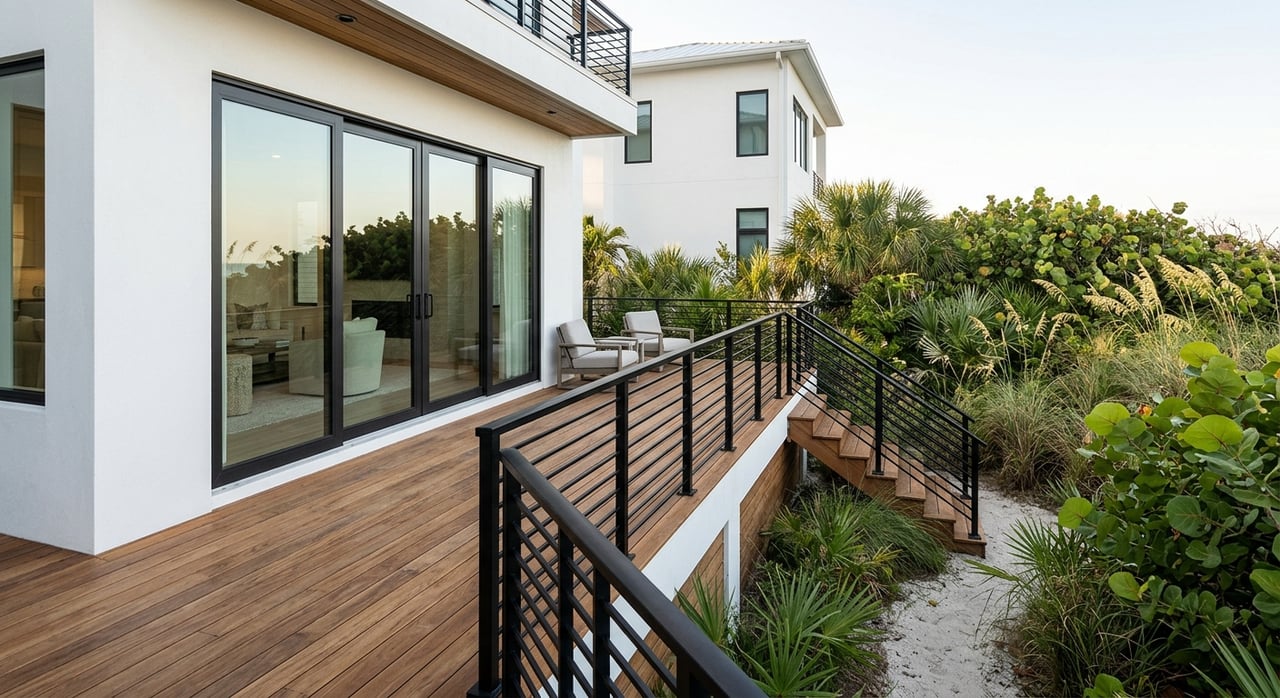
Selling An Oceanfront Home In Ponte Vedra Beach
May 28, 2026
May 28, 2026
Selling an oceanfront home in Ponte Vedra Beach is not like selling an inland property. Between shifting shoreline conditions, flood and wind documentation, and buyer questions about permits and insurance, the details matter from day one. If you want a smoother sale and a stronger position at the negotiating table, it helps to prepare well before your home hits the market. Let’s dive in.
Oceanfront property in Ponte Vedra Beach sits along an actively managed coastline. St. Johns County Coastal Management oversees beach and dune work in the area, including restoration and storm-risk projects, and the county recorded an erosion control line for Ponte Vedra Beach in late 2023.
That means your home’s current relationship to the beach should be documented now, not assumed from older listing photos or past marketing materials. Beach width, dune condition, access points, and current views can change over time, especially after storms or public shoreline work.
For sellers, this has a simple takeaway. Your listing package should reflect the home as it exists today, with current photography and accurate property documentation.
If you wait until a buyer is under contract to gather key records, you may lose time and leverage. In coastal sales, buyers often ask for documentation early because they want clarity on ownership costs, insurability, and prior work on the property.
Hurricane season in Florida runs from June 1 through November 30, which makes pre-listing preparation even more important. A well-organized seller packet can reduce uncertainty and help keep your transaction moving.
St. Johns County Floodplain Management handles elevation certificates, flood-zone determinations, and substantial improvement or substantial damage determinations for special flood hazard areas, including VE zones. The county also provides FIRM and historical FIRM determination letters through its floodplain team, with a stated turnaround time of three business days or less and no fee.
These records help buyers understand how the property is classified and how that may affect financing and insurance. They also give you a more complete story to present when your home goes on the market.
A current wind-mitigation report is another high-value document for oceanfront sellers. Florida’s Office of Insurance Regulation says insurers must offer hurricane wind-mitigation discounts and use the Uniform Mitigation Verification Inspection Form.
OIR also says the form was updated effective April 1, 2026 and is valid for up to five years if no material changes were made. If your home has qualifying features, this report can help buyers better understand potential insurance savings.
Permit history matters in any home sale, but it carries extra weight on the coast. St. Johns County says most building work requires a permit before it begins, and work involving impact-resistant coverings also requires permit review.
Before listing, gather records for:
For permitted projects over $5,000, St. Johns County requires a recorded Notice of Commencement before the first inspection. If you have complete permit records, you can answer buyer questions with facts instead of estimates.
Insurance is one of the biggest practical issues in an oceanfront sale. FEMA’s National Flood Insurance Program says most homeowners insurance does not cover flood damage, so buyers and lenders often want to review how flood coverage is being handled before closing.
Your declarations page and related policy documents can help frame the conversation early. This does not lock in a buyer’s future costs, but it gives useful context and helps reduce guesswork.
If your property has dune work, a seawall, sandbags, temporary armoring, or a dune walkover, documentation is essential. Florida DEP says construction or excavation seaward of the Coastal Construction Control Line, or CCCL, generally requires a permit.
Florida DEP describes the CCCL as the landward limit of its coastal jurisdiction area on sandy Atlantic beaches. Its siting and design criteria are meant to protect the beach and dune system, public access, native vegetation, and marine turtles.
St. Johns County’s emergency coastal-armoring guidance adds more detail that matters to sellers. Temporary protective measures have strict placement and removal rules, and permanent armoring requires separate DEP authorization.
If permanent armoring is installed at a county public beach-access easement, the owner must provide a beach walkover at the owner’s expense. That is one reason easement language, permit history, and improvement records should be reviewed before marketing begins.
Oceanfront pricing in Ponte Vedra Beach is about more than square footage and views. Carrying costs can vary meaningfully from one property to the next, even when two homes appear similar on the surface.
FEMA’s NFIP says flood rates depend on where a property is built, how it is built, and replacement cost. The NFIP also notes that flood coverage generally begins after a 30-day waiting period.
St. Johns County says its CRS Class 5 designation gives some NFIP policyholders a 25 percent discount on flood policies. When buyers compare homes, they are often thinking about total monthly cost, not just purchase price.
That is why pricing should consider factors such as:
A tightly adjusted pricing strategy is especially important here because public shoreline projects can change conditions over time. Current on-site realities usually matter more than broad neighborhood averages in this niche.
Luxury coastal buyers expect more than beautiful photos. They also want confidence in the asset.
Research from NAR’s 2025 buyer trends shows how visual the search process has become. Photos were rated very useful by 83 percent of buyers, detailed property information by 79 percent, floor plans by 57 percent, virtual tours by 41 percent, and videos by 29 percent.
That supports a polished presentation strategy for an oceanfront property. In a market like Ponte Vedra Beach, professional photography, drone imagery, floor plans, video, and 3D or virtual tours can help buyers understand both the home and its setting.
Staging also plays a role. NAR research found that 83 percent of buyers’ agents said staging makes it easier for a buyer to visualize a property as a future home.
For an oceanfront listing, presentation should feel clean, current, and move-in ready. Buyers should be able to imagine the lifestyle, but they should also be able to review the practical side of ownership with ease.
In this segment, many buyer questions center on documentation rather than decor. If you can answer them quickly and clearly, you may avoid unnecessary delays and concession requests.
Common questions often include:
St. Johns County’s public GIS tools include flood hazards, storm-surge zones, the CCCL, and wind-borne debris areas. That makes a complete, organized property file especially useful during due diligence.
In a coastal luxury sale, uncertainty can be expensive. If a buyer feels unsure about permits, storm repairs, insurance, or coastal improvements, they may ask for more time, more concessions, or a lower price.
A clean seller packet can change that dynamic. When you can provide permit records, insurance declarations, an elevation certificate, and documentation for prior storm-related or coastal work, you reduce friction and create confidence.
That does not remove every question, but it helps shift the discussion from worry to verification. In many cases, that is one of the best ways to protect your equity.
Selling an oceanfront home here calls for more than standard listing preparation. You need current coastal context, accurate property records, thoughtful pricing, and a marketing plan that speaks to how affluent buyers actually shop.
Just as important, you need a strategy that reflects this specific stretch of coastline. Ponte Vedra Beach buyers are often evaluating location nuances, documentation quality, and long-term ownership considerations all at once.
If you are thinking about selling, a tailored plan can make the process more efficient and far more effective. For a confidential conversation about pricing, preparation, and positioning your property for today’s market, reach out to Julie Little Brewer.
October 1, 2026
September 24, 2026
September 17, 2026
September 10, 2026
September 3, 2026

August 27, 2026
August 20, 2026
August 6, 2026
August 6, 2026
A seasoned full-time real estate professional, Julie has developed her expertise over decades of experience living and working in the area she calls home. She encourages you to contact her to become your trusted real estate partner. Together, let's achieve real estate success!
JULIE LITTLE BREWER
RE/MAX SPECIALISTS PV
250 A1A N STE 500
Ponte Vedra Beach FL 32082